

FAQs About Interior Design in Dubai
Mapping out an interior fit-out in Dubai raises plenty of practical questions, above all if it is your first time. Among the most frequent concerns are the price, timing, and whether permits are really needed. On this page we compile the queries owners and tenants across the UAE raise most often and respond to them plainly. Take the numbers as 2026 market estimates and ranges, not firm prices, and use them to frame a budget. Where we can we show how projects actually run in Dubai, from costs and schedules to permits and picking a designer. Read the ones that matter most to you, and you should end up with a realistic picture of what is involved.
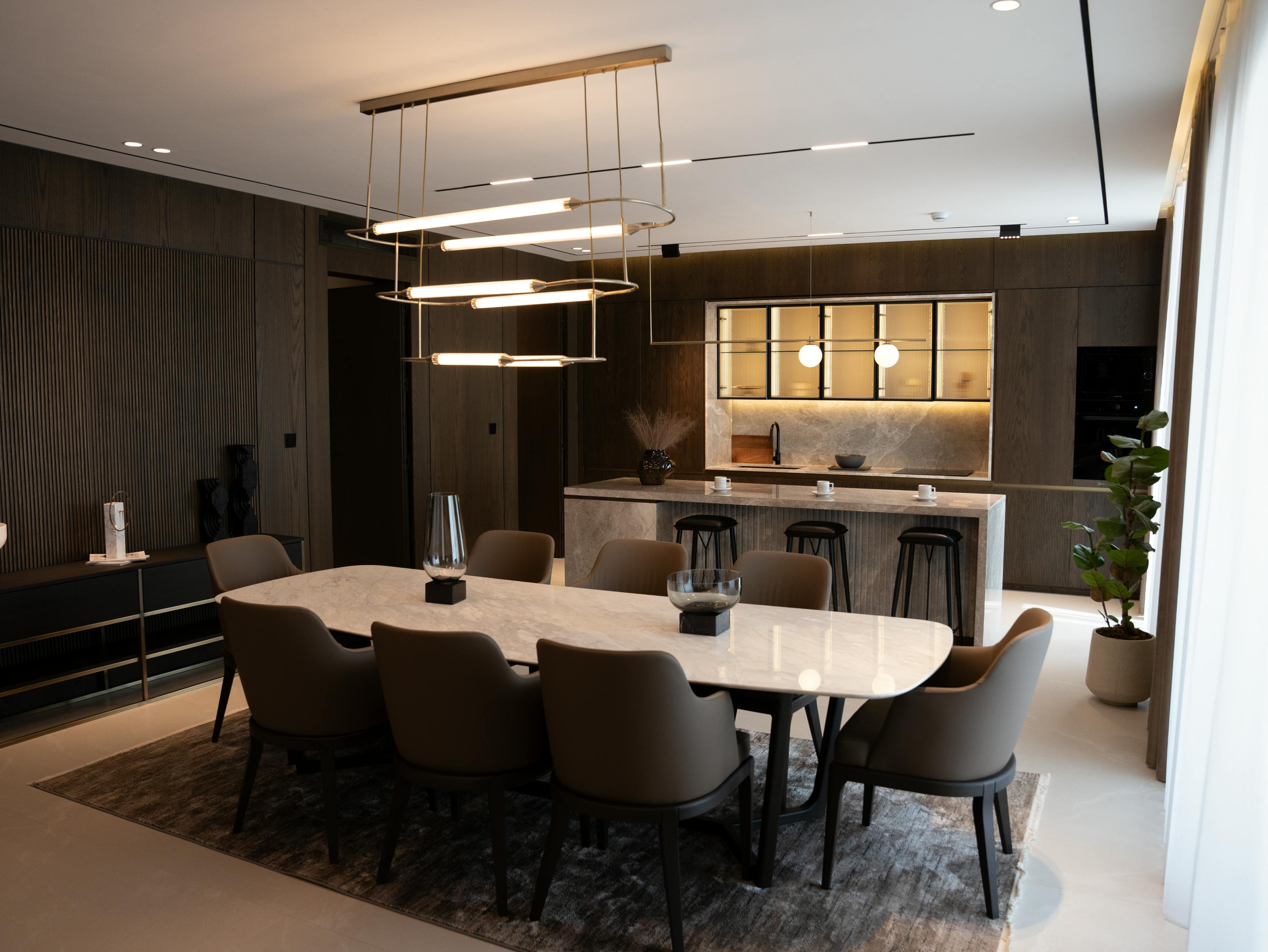
How much should interior design cost in Dubai in 2026?
How much you pay is driven largely by the size of your home, the scope of work, and the level of finish you opt for. As a 2026 market estimate, turnkey residential interior and fit-out work is commonly quoted per square foot, with standard packages around AED 75 to AED 250 and mid-tier around AED 200 to AED 400. High-end villas and penthouses can push well above AED 600 to AED 1,200 per square foot once bespoke joinery and imported materials are in the mix. In total-project terms, a basic apartment refresh might come in around AED 200,000 to AED 340,000, while luxury apartments can top AED 800,000. Design-only work is often priced at about 10 to 20 percent of the budget, or alternatively by the square foot. These typical ranges are laid out in the table underneath to help you frame a budget. Each of these figures is, remember, an estimate and rather than a firm quotation.
| Project type | Work scope | Estimated total for 2026 (AED) |
|---|---|---|
| Apartment | Budget update | 200,000 – 340,000 |
| Apartment | Mid-range refit | 400,000 – 750,000 |
| House | Mid-tier renovation | 250,000 – 600,000 |
| House | High-end turnkey | 600,000 – 2,000,000+ |
How long does an interior design project usually take?
Although schedules differ dubai landscape design with a home’s size and complexity, most projects follow a fairly predictable rhythm. A typical Dubai apartment, as a 2026 estimate, usually needs around 6 to 10 weeks from commencement to handover. A villa typically take 10 to 14 weeks, while large luxury homes full of bespoke elements may stretch to between 20 and 36 weeks. Split out, that covers a concept stage of 2 to 4 weeks, detailed design of 4 to 8 weeks, and site execution of about 4 to 8 weeks. Getting permits and the NOC can add 2 to 6 weeks, so never leave them to the last minute. Indecision and goods delayed in transit drive most delays, so quick decisions avoid stalling. Adding a small buffer into your schedule is always wise.
Do I need approvals or permits to renovate?
Yes — almost always, approvals must be in place before fit-out or renovation work begins. Typically, it begins with a No Objection Certificate from your building management. You then apply for a fit-out permit from the governing body, which for most of Dubai is Dubai Municipality. A number of communities and free zones fall under the Dubai Development Authority or Trakhees instead, so it is important to verify which body governs your address. Fire and life safety must satisfy Dubai Civil Defence, whereas utility changes go through DEWA. Routine approvals often are processed in around 3 to 10 working days, as a rough 2026 benchmark. Filing early avoids costly work stoppages later.
What is the difference between design-only and design-and-build services?
These are the two principal ways to deliver an interior project, and the right choice comes down to how involved you want to be. A design-only service supplies the concept, drawings, material selections, and specifications, after which you appoint a separate contractor to do the work. With a turnkey service, design and execution are handled under one roof, giving you one point of responsibility. Many busy clients prefer turnkey delivery, since one team handles both stages and the process tends to run smoother and faster. The design-only route offers more flexibility and competitive tendering, though it requires you to coordinate more. A good number of Dubai studios offer turnkey delivery, managing everything from concept to the final snagging. The right pick depends on your time, your appetite for coordination, and the amount of control you want to keep.
Can a rented apartment be renovated?
Yes, you can improve a rented home, but within tighter limits, and permission is essential. Structural changes and permanent alterations almost always require the landlord’s written consent, and the building will still need its usual NOC. More often, tenants focus on non-permanent upgrades that refresh a room without breaching the lease. Things like furniture, rugs, curtains, lighting, and freestanding storage — all removable — can transform a rental dramatically. Peel-and-stick surfaces and freestanding partitions provide flexibility without damaging the property. Settle upfront what needs to be restored when you move out. Before committing to any fixed work, always keep your tenancy contract and the landlord’s approvals front of mind.
Which interior design styles are popular in Dubai right now?
Across Dubai, homes reflect an unusually wide mix of tastes, from ultra-modern to richly classical. In 2026 the leading direction is towards quiet luxury and warm minimalism, which pair clean lines with natural, tactile materials. Prized for its calm and easy upkeep, contemporary minimalism remains a favourite in the city’s modern towers. Modern Arabic design stays popular in villas, blending regional heritage such as geometric patterns and warm tones with contemporary comfort. Classic and neo-classical interiors remain popular in larger villas where grandeur and symmetry can breathe. Through every one of these styles, biophilic touches, smart-home technology, and sustainable materials are increasingly woven in. Many homeowners happily blend two styles to suit their own taste and space.
How do I choose the right interior design company?
Selecting the right studio is one of the most important decisions in the whole process. Start by aligning a firm’s speciality to your project, since some specialise in luxury villas while others excel at apartments, offices, or hospitality. Dubai has a broad spread, from luxury residential names such as Luxury Antonovich Design, ALGEDRA Interior Design, and CK Architecture Interiors to major fit-out contractors like Depa and Bond Interiors. For hospitality and branded spaces, design-led studios such as Roar and Bishop Design by Paul Bishop are known, whereas Swiss Bureau Interior Design and Summertown Interiors focus on workplaces. Comb through portfolios for work like yours, then verify the firm covers the scope you need — design-only or turnkey. An attractive portfolio is not enough: clear communication, a transparent process, and a written scope matter just as much. Compare a shortlist carefully before committing.
What are the leading interior design trends in 2026?
Dubai interiors are being shaped through 2026 by several clear trends, most reflecting a broader move towards comfort and responsibility. Quiet luxury and warm minimalism lead the way, favouring understated elegance and natural materials over showiness. Sustainability looms large, underpinned by the UAE’s Net Zero 2050 goal and updated Dubai fit-out guidelines encouraging eco-friendly materials. Plants, daylight, and wellness touches come indoors through biophilic design, making homes feel calmer. Fast becoming the norm, smart-home and smart-MEP integration governs lighting, climate, and security with ease. How people now live and work at home is reflected in flexible, multifunctional spaces. Taken together, these trends suggest homes that are calmer, greener, and more adaptable.
How do I keep my project on budget?
Holding the budget is largely about planning well and making decisions early. Start from a realistic total figure, then reserve roughly 10 to 15 percent as a contingency for surprises. Agree a detailed scope and specification in writing before work starts, so everyone shares the same expectations. After the build starts, hold your decisions, since late changes are one of the biggest causes of overspending. Long-lead and imported items should be ordered early to stop delays that quietly add cost. Daily-use items like kitchens and bathrooms deserve the spend, while secondary areas can be economised on, with honest money conversations with your designer at every stage.
Is a professional worth it for a small apartment?
A lot of people assume designers are only for large villas, but professional help can add real value even in a compact apartment. With smart layouts, built-in storage, and well-scaled furniture, a good designer stretches limited space. They also help you steer clear of costly mistakes, such as buying pieces that do not fit or finishes that fail in Dubai’s climate. Better materials and sometimes better prices flow from their supplier relationships — more than a first-time client would find alone. Over time, even a few hours of consultation can firm up your plan and save money. Ultimately it depends on your confidence, your time, and how much is at stake.